Domestic certification
Compliance assessment of products, services, etc. based on domestic laws, regulations, and standard systems



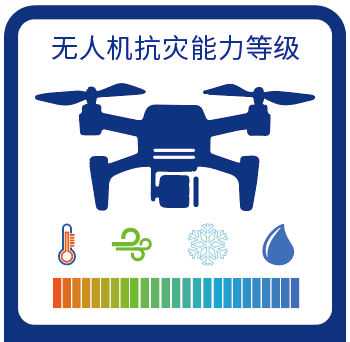
Certification of Disaster Resilience Level for Unmanned Aerial Vehicles
2025090910180868359_ Picture King
Certification Value: Why is Disaster Resilience Level Certification Required?
When natural disasters such as floods, earthquakes, and wildfires occur, unmanned aerial vehicles (UAVs) are often the first "air rescue force" to arrive at the scene. However, extreme disaster environments such as wind, rainstorm, high temperature, low temperature, etc. pose a serious challenge to the reliability of UAVs.
The certification of disaster resistance level for unmanned aerial vehicles has emerged. This national first system certification project for the disaster resistance capability of drones fills the gap in this field in China and provides a scientific and unified evaluation standard for the application of drones in emergency rescue.
Through this certification, your drone will no longer be just an ordinary aerial photography device, but a reliable equipment that can be trusted at disaster sites.
Scope of application: Which drones can be applied for?
This certification is applicable to all types of unmanned aerial vehicles used in emergency rescue, public safety, and other fields.
The certification focuses on the operational capability of drones in extreme environments, and evaluates their flight stability and operational response in disaster environments through rigorous testing of multiple indicators such as wind resistance, high and low temperatures, rainfall, and wind rain coupling.
Whether it is disaster investigation, life search and rescue, emergency communication, or material delivery, drones certified through this certification have proven their ability to reliably carry out tasks in harsh environments.
Authentication mode:
Certification Mode 1: Type Test+Initial Factory Inspection+Post Certification Supervision
certification application
type test
factory inspection
Certification Decision
Certified Supervision
reexamination
Certification Mode 2: Type Test+Post Certification Supervision
certification application
type test
Certification Decision
Certified Supervision
reexamination
Certification Mode 3: Type Test
certification application
type test
Certification Decision
reexamination
Standard rules:
The certification work is carried out according to the following standard rules:
Certification Rules: CQC16-448235-2025 Certification Rules for Disaster Resilience Level of Unmanned Aerial Vehicles
Technical Requirements: CQC/PV20001-2025 Technical Requirements for Certification of Disaster Resilience Level of Unmanned Aerial Vehicles
These standard rules systematically regulate the operational capabilities of unmanned aerial vehicles in extreme environments such as wind resistance, high and low temperatures, rainfall, and wind rain coupling, providing a basis for evaluating the disaster resistance level of unmanned aerial vehicles
Overview of Test Environment Simulation Capability
Test environment parameter range to simulate disaster types
Temperature -40 ℃~70 ℃, extremely cold and high temperature disaster environment
Maximum wind speed of 80m/s in extreme windy environments such as typhoons and tornadoes
Maximum rainfall 250mm/h extremely heavy rainstorm, flood disaster environment
Combination simulation of wind and rain coupling in the above environment, composite extreme disaster environment




TEL:
Room 101, Building 1, No. 5 Jinzhong Road, Dongcheng Street, Dongguan City, Guangdong Province
© Copyright © 2026 Dongguan Hongding Energy Storage Testing Technolog